
• Skip to primary navigation
  • Skip to main content
  • Skip to primary sidebar
  • Skip to footer

DisplayMonk

Solution to your problem

  • Home
    • Privacy Policy
  • About Us
  • Repair Tips
  • Schematics Bios
  • Course
  • Online Jobs
  • Tools
  • Enquiry / Contact
Home » Laptop Motherboard Repair » Page 4

Laptop Motherboard Repair

Laptop Battery Charging Section Repair

March 26, 2022 by displaymonk

laptop battery charging circuit repair

What is laptop battery charging section repair issues

In laptop chip level repair there is the main problem that comes in preparing is the laptop battery charging repair-related issues. It is one of the most reported issues by customers and enthusiasts.

The reasons can be anything but the main cause is that the laptop adapter is not able to provide 19v current to your laptop. More issues can be there like like motherboard issues. We will cover them separately in another blog.


How laptop handle laptop battery charging repair

There are two types of mechanisms used in the laptop battery charging repair section.

  1. Buck Converter
  2. Buck-Boost Converter

Let’s see them one by one.


1. Buck Converter :

Single-phase synchronous converter and has the same working. This consists of a mechanism in which one high side MOSFET and one low side MOSFET turns on-off alternatively to turn down the voltage from 19v to 12.6v which is necessary for a laptop battery.


2. Buck-Boost Converter :

There is a use of the first set of high-side and low-side MOSFETs which comes before the inductor. They can also work as a regular buck converter.

After it, there is a second set of MOSFETs which is used to boost the voltage coming from the AC adapter.

The main disadvantage is that it takes 5v to 20v to charge the battery. Which makes it very slow to charge the laptop.


Battery voltages in the cell of the laptop

Lilium cells make laptop batteries. These can be made up of either Li-ion cells which are like cylindrical shapes or LiPo cells which are flat rectangular.

The voltages of these change according to the brand of laptops. Typically Li-ion has a voltage of 3.6 to 3.7v. LiPo cells typically have voltage around 3.7v to 3.85v.


Troubleshooting charging circuit

1. No Power :

The first thing you will check is whether the main power rail in a laptop is present or not. If it’s present that means the problem is not present in the charging circuit. You can still check any short MOSFET for DC supply or changing ic having missing voltages. Because in some cases they can be root or trouble too.

Before it, you have to check you have HPB or an NVDC configuration. With HPB configuration you have to check the voltage after the second DC-in MOSFET. You have to find AC adapter voltage.

In the NVDC connection, you have to check voltages after the buck convertor coil and also after the fuse if it exists in that laptop model for location.

If the found fuse is burnt via checking before its voltage and after its voltage. Replace it and go to the next section for ‘short gound on the main rail’. resolve it before applying power.


2. Shorted DC-in MOSFET

There is also one issue that is very common. The issue is mostly faced by newbies in this field. There is a difference between MOSFET blocking the current and *failed*.

In the HPB technology method there can be the case that the main power rail will be present as the current will pass from within shorted MOSFET but there can be a possibility that some signals from charger IC may be missing which makes our platform unable to run.

Whereas in NVDC the main power rail may be missing. Check the resistance between the Drain/Source/Gate of both DC in the section for whether they are shorted or not. The resistance should be at least a few kilo-ohms.


3. There are burn-in current sensing lines in the laptop battery charging repair section

The overcurrent from battery adapter to battery gets monitored by charging IC. There can be burned in the current sensing circuit either in current sensing sensors or resisters that connect them to current sensing amplifiers. The easy way is to measure the resistance at the current sensing amplifier pin of the charger IC. The measured resister should be a summation of the current sensing resistor and resisters which connect them to IC.

This also takes care of any possible break of line that was happened due to any liquid damage.


4. Missing voltages on charging IC in laptop battery charging repair section

There are some voltages that are required to run the charging IC. The names can be vary depending upon the charger IC brand. But majorly,

  1. DCIN/VCC – Mostly it is close to the AC adapter. These are voltages coming from the AC adapter.
  2. ACIN/ACDET – Mostly it is required a voltage of more than 2.4v or 2.6v. It is dependent on charger IC and it uses the voltage divider to get the current-voltage range.
  3. REGN/VDD – It has internal LDO output mostly between 5v to 6v. The input for this output is taken from DCIN/VCC.

The following signals should come after coming previous signals.

  1. ACOK  – It denotes the input voltage is good. In the case of P-type MOSFETS, it drives MOSFET gates directly.
  2. ACDRV – Only present in the n-channel type of MOSFETs. Mostly cases it is around 25v voltage which should minimum of more than 6v.

5. Damaged Passive Component in laptop battery charging repair section

By doing a visual inspection we can spot any damaged capacitor or missing/damaged resister in the circuit. This comes mostly in cases of liquid damage but rarely in other cases. You can follow visual hints if you know or found that there is liquid damage.

One of the issues can be gate resisters for DC-in MOSFET, which could be near it. You can always them for precaution.


6. Dead charger IC in laptop battery charging repair section

If you go by all previous issues then the issue might be that the IC itself is dead. Check for its behavior change by replacing it.


7. Battery not charging in laptop battery charging repair section

Try multiple batteries. The problems can be the battery itself for the battery not charging. Change the battery until you found the right one. because the market is filled with garbage quality batteries.  99% of problems can be due to batteries. While some new batteries are required to ‘kick-start’ via plug-in the adapter, some come filled in with 50%, 80%, or in some cases 20% too. It is important for you to know whether you have HPB or NVDC in your circuit. Your battery should start charging 100%.


8. Battery not detected

There can be an issue with the charging circuit SM-Bus. Check all voltage modes and SM bus to the ground on SMBus SDA and SCL lines.


9. Low voltage on battery charging rails

In the case of NVDC technology if on battery charging rail there is too low voltage present the battery will not start to charge. Thye gate resister of MOSFET or MOSFET itself which is situated between buck convertor output and better power rail can be problematic. Inspect it and change it if it’s found faulty.

In HSB topology battery is most connected to the buck convertor directly. The bad battery or deeply discharged battery will pull down output. One way is to let the battery charge overnight, if this does not solve the problem then replace the battery. Without the battery, the output within the output rail will be low. DC-in MOSFET or Current sensing can be a problem in this situation.

In some chargers, ic’s the ic have a ‘CELL’ pin to control the voltages applied to batteries relative to the number of cells in series in the battery.  The wrong setting in ic can cause wrong output.


10. High voltage on battery charging rail in laptop battery charging repair

Shorted high side MOSFET with buck convertor on charging rail can be also caused for it. Shorted battery to system MOSFET can be problematic in HPB technology.


You can also check our other laptop preparing help guides.


thank you for your visit…


Filed Under: laptop desktop chip level repair help guide Tagged With: Laptop Battery Charging Section, Laptop Motherboard Repair, laptop motherboard repair guide

Dell Laptop Beeps Codes

March 23, 2022 by displaymonk

Dell laptops beep codes

There can be the case when laptop chip level repair person needs information on dell laptop is not working. It can be gte from the beep code produced by the Dell laptop. These dell laptop beeps codes are given below:

Dell laptop beeps codes and their solutions are  given below:

One – Possible system board failure or BIOS ROM checksum failure

Two – No RAM detected

Three – Possible system board failure or Chipset error

Four – RAM read/write failure

Five – Real Time Clock failure

Six – Video card or chip failure

Seven – Processor failure

Eight – Display failure

For more visit: Dell.com

You can also check our other ICs in laptop motherboard guides.

thank you for your visit…

Filed Under: laptop desktop chip level repair help guide Tagged With: Laptop Motherboard Repair, laptop motherboard repair guide

What Is Multimeter In Laptop Repairing

March 6, 2022 by displaymonk

what is multimeter and how to use it

What Is Multimeter And How To Use It:

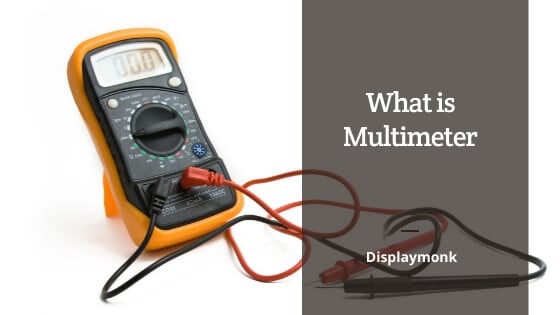
There are different parts of a multimeter. So we will know what is multimeter in laptop repairing below:

the uses of multimeter
the uses of a multimeter.

1. Power Off :

This is used to turn the multimeter off.

2. DC Voltage :

This is used to set multimeter on DC range. This is helpful to measure DC supply on a multimeter.

3. Probe :

Probes are used to count the voltage supplies. Voltage supplies can be of two types AC voltage or DC voltage. We can measure both types of ac or dc type of voltages using a multimeter.

Just we have to turn on the rotational switch top appropriate location. It can also calculate the beep range and cold testing in laptop reparing.

4. Ohm for resistance :

Ohm is the unit of resistance. We can use the rotary switch in the ohm range. This range measures active available Ohm supply.

5. Buzzer Continuity :

The buzzer is the indicator on the multimeter which can be turned on by the multimeter.  The main purpose of the buzzer is to check continuity via probs.

5. Diode :

The diode range is available on a multimeter. It is used to check any available diode for its value. It can be measured by probes.

6. Temperature :

Temperature can also measure on some multimeters. This feature is if available you can see the temperature symbol on the multimeter which can be targeted via a rotary knob.

7. Rotary Switch :

The main purpose of the rotary switch is to make it unable to measure all things on a multimeter. If we want to measure any range of supply or turn of the multimeter we can use the Rotary switch.

8. DC Current :

The DC current can be measured on a multimeter via the DC range. We have to put one probe on the ground and another probe on the element we want to measure.

9. Display :

The display is used to get information about the current value of the multimeter.  The current can display ac range, dc range, ohm range, buzzer.

You can also check our other laptop preparing help guides.

thank you for your visit…

Filed Under: laptop desktop chip level repair help guide Tagged With: Laptop Motherboard Repair, laptop motherboard repair guide, What Is Multimeter In Laptop Repairing

Component’s Code And Abbreviation On A Laptop Motherboard

February 21, 2022 by displaymonk

Laptop's Component's Codes And Abbreviations

IC stands for the Integrated circuit. There is different ic’s present over laptop motherboard. Each ic has separate functionality. The main purpose of IC is to take the voltage and perform a specific task. Below are component codes and abbreviations on a Laptop motherboard. These are important as you are going to make a career in laptop repairing or you are an experienced repairman.

Motherboard Chips Codes For Component’s Code and Abbreviation On A Laptop Motherboard

In Laptop motherboard chips are very small in size therefore long numbers cannot be printed on the chip. Therefore small codes are printed on the chips. Normally first Two letters indicate the chip number and the last two digits indicate the batch number.

For the chip, we have to check the first two letters only,

Components code and abbreviation on Laptop motherboard

Component Codes And abbreviations For Laptop Motherboard Chips

Chip Code Chip Long Number
A3 RT8209E
A5 RT8100PQV
A8 RT8209M
AA RT8800PQV
AJ RT9607PQV
AO RT8209B
AP RT8800A
AP RT8800APQV
BD RT9605BPQV
A6 RT8209PGQW
CB RT8205D
CJ RT8205A
CK RT8205B
CL RT8205C
CP RT8207
CZ RT8205A
K0 RT8209NGQNGQW
DJ RT8205C
DJ RT8205L
DK RT8204
DS RT8223B
DT RT8205E
DY RT8106GQW
EL RT8015A
EM RT8205L
EQ RT8223M
FF RT8208A
FG RT8208
FG RT8208B
D9 RT9716AGQW
FR RT8204B
GG RT8015B
CZ RT8561AGQW
JL RT8204AGQW
FR RT8204BGQW
H6 RT8204CGQW
CK RT8205BGQW
CL RT8205CGQW
EL RT8015A
CB RT8207LGQW
EN RT8205MGGQW
CP RT8207GQW
DZ RT8113
EF RT8207LGQW
J7 RT8207MGQW
11 RT8223NGQW
JL RT8204A
20 RT8223PZQW
EP RT8223LGQW
EQ RT8223MGQW
FH RT8208B
FF RT8208AGQW
FG RT8208BGQW
H8 RT8208DGQW
C7 RT9293-20
30 RT8208EGQW
31 RT8208BGQW
FH RT8209AGQW
C6 RT8202P
A0 RT8209BGQW
A3 RT8208FGQW
JX RT8209LGQW
DH RT8207L
A8 RT8209MGQW

You can also check for laptop adapter charger repair to repair a charger for a laptop. Also, check for fan spins and stops repeatedly for the desktop CPU also for laptop repairing related fault troubleshooting.

thank you for your visit…

Filed Under: laptop desktop chip level repair help guide Tagged With: Component Codes And abbreviations, Laptop Motherboard Repair, laptop motherboard repair guide

Laptop Motherboard Debug Card

February 20, 2022 by displaymonk

laptop and desktop debug card details

Debug Card – What is debug card and how to use it

Introduction

Debug Card is a powerful diagnostic tool for laptop repair technicians and administrators to troubleshoot
various problems of IBM-compatible PCs. It is easy to install, yet extremely powerful to use. With
Debug Card in hand, you no longer have to go through the tedious and time-consuming process of
trying to figure out what is wrong with your PC hardware. Debug Card will tell you exactly what
is wrong with your PC in just seconds. It saves you time and money.

Our new and improved design of Debug Card diagnostic card can work with almost all popular
types of CPUs, Motherboards, and BIOSes..

System requirements

The Debug card itself only requires an empty PCI or ISA expansion slot. It is not necessary to
install memory chips to perform analysis. “POST Codes” can be displayed through the
hexadecimal display panel on the Debug Card itself.

Debug card indicator

‘Indicators’ are any light-emitting diodes(LED) or hexadecimal display panel that may be
mounted on a Debug Card. This section discusses the following indicators that appear on the
Debug Card:

  • POST-Code Display
  • PCI BUS SIGNALS LEDs

The Diagnostic Code “no”

The Bios diagnostic codes showing “no” indicates that there is no Bios POST code has been received. Same as the initialization codes of the diagnostic card.

PCI Signal Definition:

1.CLK – Motherboard Clock Signal. Should be on when power is supplied to the motherboard even without a CPU.
2. BIOS – BIOS Read Signal. Flashes when the CPU reads BIOS code.
3. IRDY – Device Ready. Flashes when an IRDY signal is detected.
4. OSC – ISA Oscillation Indicator. Indicate ISA Oscillation Signal is available.
5. FRAME – PCI Bus Frame. Should be on under normal circumstances and flashes
when a PCI Frame Signal is detected.
6. RST Reset – After power-on or reset, this indicator should be on for a half-second and then turned off.
7. 12V – Power Supply, 12-Volt Positive. Should be on all the time otherwise, there
is a short circuit.
8. -12V – Power Supply, 12-Volt Negative. Should be on all the time otherwise, there
is a short circuit.
9. 5V – Power Supply, 5-Volt Positive. Should be on all the time otherwise, there is
a short circuit.
10. -5V – Power Supply, 5-Volt Negative. Should be on all the time otherwise, there
is a short circuit.
11. 3V3 – Power Supply, 3.3-Volt. Some motherboards have a 3.3V power supply to
PCI slots. This indicator should be on if the motherboard supplies 3.3V
power.

Installing Debug Card

Installation Procedure

Steps to install a Debug Card:

  1. Install the Debug Card in any available PCI or ISA expansion slot.
  2. Power on the machine

You can see different error codes and their meaning in this article.

Thank you for your visit to CPU Core Section Working For Desktop Motherboards!

You can also check for

Difference Between Intel Core i3 i5 and i7 Processors
Components Of The CPU And Identification With The Full Form Of The CPU
Guide For Chip Level Repair Dead Desktop Motherboard
Desktop Chip Level Repair Guide
Desktop SMPS Power Output
Types Of Regulated Power Supply Used In Motherboard
What Is Computer Architecture
Laptop Adapter Charger Repair
IC’s In Laptop Motherboard for laptop repair at home
Laptop Motherboard Digital Electronics
Laptop Motherboard Components List
3 Must Know The Basics Of Laptop Chip Level Repair
Laptop Chip Level Repair Career Guide on how to be a laptop repairman
Repairing a Dead Laptop
QUANTA Motherboard Identification Number
How To Find a Laptop Motherboard Part Number
Introduction To Chip Level Repair Guide For Laptop
Laptop Battery Charging Section Repair
Laptop Schematics Free PDF

Filed Under: laptop desktop chip level repair help guide Tagged With: Laptop Motherboard Debug Card, Laptop Motherboard Repair

Desktop Motherboard Diagnostic Card

February 20, 2022 by displaymonk

what are signals on debug card

We are going to see some information on Desktop Motherboard Diagnostic Card.

Simple Error LED Light Indicators

  • New simple faults LED lights, show the computer faulty areas, no need to use any
    digital codes interpretation, much easier than the LCD screen diagnostic cards.
  • Tech fact:Due to the periodical updates of the newer bios codes from the Bios
    and/or the computers manufacturers, only the Bios and/or the computer
    manufacturers have the most updated and complete list of the Bios codes. These LED
    lights work just as same as all other diagnostic cards on the market and needs to
    rely on the updated Bios codes, please use these LED codes as a quick reference.
KQCPET6 V6 LED description

KQCPET6 V6 LED Light Descriptions

  • Unstable – If the computer motherboard is not stable, with potential faults, or computer accessories parts are not fully compatible with the motherboard, this LED will be steady ON. (Only PCI and PCIe diagnosis comes with the Stability Test feature) .
  • Stable – The computer is stable, with no error. (Only PCI and PCIe diagnosis comes with the Stability Test feature) .
  • Ready – When this LED light is ON(please take note all 3 dots must light upon the 4digital display, please check the above picture), ok to reboots the computer to do the stability test. If this Ready LED is not On, do not reboot the computer for the Stability Test. (Only PCI, PCIe connections come with the Stability Test feature).
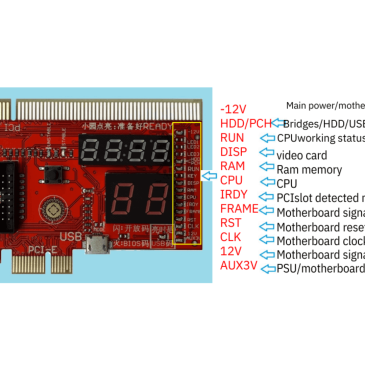
  • -12V – When the test card installing on the standard PCI slot, this LED will be steady ON otherwise, there is no such voltage from PSU or the motherboard is short. When using LPC、PCIE、MINIPCIE、EC、USB connections to test the computer, this LED need not be On.
  • HDD/PCH – Hard Drive / Bridges (North or South) / SATA / USB modules self test failed
  • RUN – This shows the CPU has been running, as soon as the CPU has been initialized and run, this LED will light even though the CPU stopped working now, this LED will remain ON. To check on this LED, remove the CPU, power on the motherboard, if this LED still remains ON,
    the LED needs to be checked for fault.
  • DISP – Video card / integrated motherboard GPU self-test failed.
  • RAM – RAM/motherboard memory module or power fault.
  • CPU – CPU / motherboard CPU coprocessor module or peripheral path self-test failed.
  • IRDY – Improved IRDY LED light, unique LED light when using the PCI slot, this LED lights ON when there is IRDY signal, works the same way as the CLK signal. This LED is absent when using the LPC、PCIE、MINIPCIE、EC connections.
  • FRAME – Improved FRAME LED light, it lights ON when there are frame cycle signals, works the same way as the CLK LED.
  • RST – This LED flashes very quickly for about half a second when using the test card on the PCI slot during the power ON or pressing the Reset button on the computer. It remains ON if the reset wire connects to the wrong other pins on the motherboard or the motherboard reset circuitry is faulty. When using the LPC connection to test the computer, this LED may not light at all, please focus on the digital diagnostic codes. Only connecting with PCI or PCIe, this LED shows the motherboard reset activity.
  • CLK – This LED lights when there is a CLK clock pulse signal. This LED may flash quickly enough so that it looks like never light at all.
  • 12V – This LED should remain steady ON when the test card is installed on the computer PCI slot, otherwise, there is no such voltage from the PSU or the motherboard is shorted. When using the LPC、PCIE、MINIPCIE connections, this 12v LED should remain OFF.
  • AUX3V – This LED is the unique 3.3v indicator on PCI、PCIE slots, should remain ON when the motherboard is powered ON. A few motherboards with built-in PCI slots may not have this voltage. LPC connection does not have this voltage, so this LED will remain OFF.
  • Open codes – Except code ‘no’, when this LED flashes ON and OFF, the codes are the 2digit Qiguan open codes. If this LED remains OFF, the codes are Bios Code. On TypeB cards, this LED steady ON indicates the USB codes.

Precaution for the Diagnostic Card PCI/PCI-E 1X Connection

  • When there are PCI and PCIe connectors on the same motherboard, please
    use the PCI slot.
  • When there is only a PCI-E slot, please install the diagnostic card PCIe
    connector to the motherboard PCI-E X1/X4/X8/X16 connector.
  • Important: Never connect the PCIe connector to the motherboard non
    PCIe (PCI or AGP slots), this may short the diagnostic card and/or
    motherboard when the power is ON.
Precaution for the Diagnostic Card PCI/PCI-E 1X Connection

The Diagnostic Code “no”

The Bios diagnostic codes showing “no” indicates that there is no Bios POST code has been received. Same as the initialization codes of the diagnostic card.

What to do with this Bios Code ‘no’ when the diagnostic card is installed on the PCI slot?

  1. Showing POST code ‘when the diagnostic card is not properly installed on the motherboard.
    solution:Clean the diagnostic card pins by using a paper rubber ②There is dust, rust, or oxidations on the
    motherboard slot. Please clean the slots and reseat the diagnostic card a couple more times. Check the slot pins
    for any loose, bent, or broken pins. All these situations will cause improper contacts so that the diagnostic
    card will not be able to perform the diagnosis or give inaccurate diagnostic results. If there is poor or no
    contact of the pins, the diagnostic card will show the following symptoms: blank display no diagnosis display,
    no Bios Code / wrong code, LEDs remain OFF, normal Qiguan codes will be reported as none.
  2. When CPU never worked, the codes will show ‘no’ and the RUN LED remains OFF
    Solution: Motherboard did not initialize, check if CPU is faulty, check CPU jumpers and settings, check
    PSU voltages, motherboard CMOS battery.
  3. Some empty motherboards without RAM, RAM failed the self-test or RAM incompatibility, the Bios codes
    showing ‘no’.
    Solution: Clean the RAM pins with a paper rubber, clean the RAM slots, reseat the RAM properly. Observe if
    the diagnostic codes are getting the new codes.
  4. The motherboard Bios is faulty
    Solution: Refresh/reprogram the BIOS.
  5. The computer works normally, still showing ‘no’;
    Solution: If still showing ‘no’ after checking all pins contacts are good, the motherboard slot is not getting the BIOS codes, please be advised to use the diagnostic card on the other motherboard slots (LPC/PCI), or on the other motherboards, as soon as any other slot or motherboard gets the different codes than ‘no’, the diagnostic card is a working unit.
  6. Qiguan codes(Only applies to the Qiguan diagnostic card with 4digit Qiguan diagnos is already indicated those factors that causing Bios codes ‘no’.
    Solution: Correct the errors reported by the Qiguan diagnosis codes.

What to do when the codes showing ‘no’ on LPC
connection diagnosis?

  1. First, check on the motherboard LPC connector to make sure it is marked any of the followings:
    LPC_DEBUG, LPC,  DEBUG,  LPC1,  DEBUG PORT,  JLPC,  LPC_CON,  LPC-DEBUG, LPC/TPM1,  JTPM1, TPMS1, TPM, etc. dual rows of the LPC pins;
  2. Next look for the ‘pin1’ on the motherboard LPC debug port.
  3. Double-check the above 2 checks are correct, then select either a large or small LPC connector and align pin 1 to install the LPC connector on the motherboard LPC debug port.
  4. check if the USB power cable is in advance connected to the diagnostic card which will be
    installed on the motherboard LPC debug port.
  5. . Then powers on the computer, if still showing ”no”, motherboard LPC pins could have the
    oxidations or poor contacts, just need to power off and reseat the LPC connectors a few more times
    to help get rids of the oxidations and rust for better pins contacts.
  6. CPU never worked and showing ‘no’ and the diagnostic card RUN LED remains OFF.
    Solution: First check if there is any CPU open circuitry. Check if the CPU is getting the
    power and heating up after powering on.
  7. Some empty motherboards without the RAM installed or the RAM failed the self-test / RAM incompatibility
    will show the code ‘no’, please try using the paper rubber to clean the RAM pins, clean the RAM slots, reseat the
    RAMs and check if there are any new diagnostic codes.
  8. motherboard BIOS faulty.
    solution: refresh or reprogram the Bios and try again. If not familiar with the motherboard BIOS refresh,
    please do not do this.
  9. The computer works normally, still showing ‘no’;                                                                                                            Solution: If still showing ‘no’ after checking all pins contacts are good, the motherboard slot is not
    getting the BIOS codes, please be advised to use the diagnostic card on the other motherboard slots (LPC/PCI), or
    on the other motherboards, as soon as any other slot or motherboard gets the different codes than ‘no’, the diagnostic
    a card is a working unit.
  10. Qiguan codes(Only apply to the Qiguan diagnostic card with 4digit Qiguan diagnosis)already indicated those factors that causing Bios codes ‘no’.
    Solution: Correct the errors reported by the Qiguan diagnosis codes.

What to do when the codes show ‘no’ on PCIe connection diagnosis?

The 2digit codes showing ‘noon the PCIe connection diagnosis indicates that the diagnostic card is not getting the
BIOS Code and not getting the Qiguan 2digit open codes as well.
1. on the motherboards with both PCI and PCIe connectors, please use the PCI as a priority, this is because the
motherboard manufacturers could have designed one of these connectors to output the BIOS codes, while the
other connector will not have the Bios codes.
2. When the motherboard does not come with PCI but PCI-E slot, the diagnostic codes show ‘no’, the followings
are the 2 possibilities.
a. there is other BIOS diagnostic port such as LPC connector on the motherboard. Please use the LPC diagram
guide in this manual to help check if there is LPC debug port on the motherboard, if so, please use the LPC
diagnosis instead.
b. If there is no other LPC debug port but only the PCIe slot, the motherboard has no Bios codes sent to its PCIe
connector, we can do the followings:
①CPU never worked with the bios codes ‘no’ and the RUN LED remains OFF.
Solution: First check if there is any CPU open circuitry. Check if the CPU is getting the power and heating up
after power on.
P.68
②. Some empty motherboards without the RAM installed or the RAM failed the self-test / RAM
incompatibility will show the code ‘no’, please try using the paper rubber to clean the RAM pins,
clean the RAM slots, reseat the RAMs, and check if there are any new diagnostic codes.

③. motherboard BIOS faulty
solution: refresh or reprogram the Bios and try again. If not familiar with the motherboard
BIOS refresh, please do not do this.
④. The computer works normally, still showing ‘no’;
Solution: If still showing ‘no’ after checking all pins contacts are good, the motherboard
the slot is not getting the BIOS codes, please be advised to use the diagnostic card on the other
motherboard slots (LPC/PCI), or on the other motherboards, as soon as any other slot or
motherboard gets the different codes than ‘no’, the diagnostic card is a working unit.
⑤.Qiguan codes(Only applies to the Qiguan diagnostic card with 4digit Qiguan diagnosis)
already indicated those factors that cause Bios codes ‘no’.
Solution: Correct the errors reported by the Qiguan diagnosis codes.


You can also check our other laptop preparing help guides.


thank you for your visit…

Filed Under: laptop diagnostic card, technical category with Uncategorized Tagged With: laptop diagnostic card, Laptop Motherboard Repair

  • « Go to Previous Page
  • Go to page 1
  • Go to page 2
  • Go to page 3
  • Go to page 4
  • Go to page 5
  • Go to Next Page »

Primary Sidebar

Search On Website

Laptop Desktop Chip Level Help Guide

  • Windows 10 Restarts After Shutdown

    Windows 10 Restarts After Shutdown

    March 24, 2025

  • T.VST59.031 Firmware Software

    T.VST59.031 Firmware Software Download Latest

    March 18, 2025

  • Mobile and Tablet Repairing Institute Class in Ratnagiri, Maharastra

    Mobile and Tablet Repairing Institute Class in Ratnagiri, Maharastra

    December 14, 2024

  • Laptop and Computer Repairing Institute in Ratnagiri, Maharastra

    Laptop and Computer Repairing Institute Class in Ratnagiri, Maharastra

    December 14, 2024

  • pm-modi-lic-sakhi-yojana

    LIC’s Bima Sakhi Yojana 2025: How To Apply?

    December 12, 2024

Footer

Mobile Repair

We do mobile repairing.

Learn more about mobile repairing service.

Laptop Repair

We laptop repairing.

Learn more about laptop repairing service.

TV Repair

We do TV repairing.

Learn more about tv repairing service.

Copyright © 2025 · DisplayMonk

  • Home
  • About Us
  • Repair Tips
  • Schematics Bios
  • Course
  • Online Jobs
  • Tools
  • Enquiry / Contact